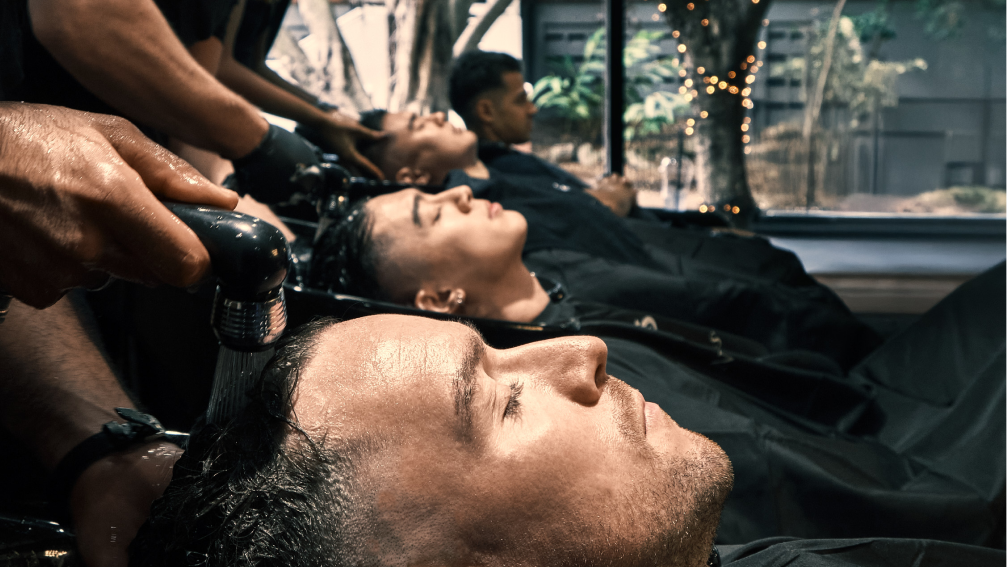
A practical guide to talking with your barber about length, shape, styling and maintenance, with examples you can use in the chair.
17 October 2026
The short answer
Tell your barber what you want to keep, what you want to change and how you normally style your hair. Bring a reference photo if you have one, but be open to a version that suits your hair type, growth pattern and routine. A good consultation is a conversation, not a test of haircut terminology.
It can be surprisingly difficult to explain a haircut while you are sitting in the chair. You might know exactly what looks wrong in the mirror but not the name for the change you want. The easiest approach is to describe the result in ordinary words. Your barber can translate those preferences into a shape, technique and finish that fit your hair.
At Langanis Studio in Teneriffe, the consultation is part of the service. You can arrive with a precise reference or only a general idea. Either way, a few useful details help you and your barber agree on the plan before the cut begins.
Before you go: decide what matters most
Think about your hair on an ordinary day, not only immediately after it has been professionally styled. Do you use a product every morning? Do you prefer to air-dry it? Do you need a neat shape for work, or are you comfortable with more texture and movement? This helps your barber recommend something you can maintain.
Look at your current cut from the front, sides and back. Identify one or two things you like and one or two things you would change. You might want to keep the length on top but make the sides tighter, soften a hard line, reduce bulk around the crown or change how the fringe falls. Specific observations are more useful than saying the last cut “didn’t work.”
Bring photos if they help. A front view alone may not show the sides or neckline you expect, so multiple angles can make the reference clearer. Your barber can explain what is achievable with your present length and texture. A photo is a direction for the consultation, not a guarantee that two different heads of hair will behave identically.
Five details worth sharing
The length you want to keep on top, at the sides and around the fringe.
How sharp or natural you want the outline, fade or neckline to look.
How often you are willing to return for a trim.
The time and products you are willing to use for daily styling.
Anything about your last haircut that you would repeat or avoid.
What to say when you sit in the chair
Start with the overall goal: “I want a cleaner version of what I have,” “I am growing the top out,” or “I want a noticeable change.” Then add the details that matter most. If you do not know whether a fade, taper or scissor cut is right, say so. You can ask your barber to show or explain the difference before deciding.
Be clear about length. “Just a little off” can mean different things to different people. If a particular part is important, show your barber with your fingers or point to the area in the mirror. Ask how much will be removed and what the cut will look like after it has grown for a few weeks.
Tell your barber about your hair’s natural behaviour. A cowlick, a fringe that separates, hair that expands in humidity or a beard that grows unevenly can change how a style wears. If you have tried a similar look before and disliked the upkeep, mention it. The consultation should account for real life as well as the reference image.
If you are including beard work, discuss the shape separately: how much length to keep, how defined you want the cheeks and neckline, and whether the beard should blend into the haircut. The men’s services page lists beard trims alongside style cuts and other grooming options, while the live booking page shows the current appointment choices.
Helpful questions to ask your barber
Will this style work with my hair?
Ask how the proposed cut works with your hair’s density, texture and growth direction. Your barber may recommend a variation that captures the feel of your reference while working better for you.
How will it look as it grows out?
A cut that looks sharp on day one can require regular maintenance. Ask which areas will lose shape first and roughly when you might want a tidy-up. Langanis Studio’s men’s FAQ suggests that structured fades often need more frequent maintenance than longer scissor-based cuts, but your own routine can differ.
How do I style it at home?
Ask your barber to show you the order of steps: how to dry it, how much product to use and where to place it. If you prefer a simpler routine, say that before the cut so the style can be planned around it.
What would you change about my reference photo?
This invites a practical discussion instead of a yes-or-no answer. Your barber can explain the adjustments needed for your length, hairline or daily routine.
Simple ways to describe the cut you want
For a tidy-up: “I like the shape I have. Please clean up the sides and neckline, keep most of the length on top and show me where you plan to take weight out.”
For a lower-maintenance style: “I want something neat that I can style quickly without much product. What length and shape would work with the way my hair grows?”
For a fade: “I want the sides closer, but I am not sure how high to take the fade. Can we talk through the options and how often it will need tidying?”
For a change of direction: “I have a photo of the style I like. What parts would suit my hair, and what would you adjust so I can wear it day to day?”
These are starting points. You do not need a scripted request; you only need to communicate the result and any limits that matter to you. If the plan changes during the consultation, repeat the agreed length and finish back to your barber so you are both working toward the same outcome.
What if you are not sure what to book?
Look through the services for men before booking. The page lists style cuts, beard trims, shaves, colour and treatments. A regular cut, a beard service and a larger colour change are not interchangeable bookings. If you need several services or are planning a substantial transformation, contact the studio so the correct appointment can be arranged.
You can also ask about timing if you have another commitment afterwards. The services page says many men’s appointments take around 30–60 minutes depending on the service and level of detail, but the booking calendar is the place to check the current appointment length for your choice.
Frequently asked questions
Do I need to know the name of the haircut?
No. Describe the length, shape, finish and daily effort you want. A reference photo and a discussion with your barber can fill in the technical details.
Should I bring a photo?
Yes, if it helps explain your goal. Bring more than one angle when possible and discuss how the look could be adapted to your hair.
Can I ask for advice before deciding?
Yes. Consultation is part of the Langanis Studio experience. Explain what you like and what has not worked for you, then ask your barber what they recommend.
Can I book at the start of the week?
The Teneriffe studio lists Monday hours of 9:00 am–7:00 pm. Read our guide to Monday barber shop hours and check the live booking calendar for an available time.